×
- Hello
- Login or Register
- Quick Links
- Live Chat
- Track Order
- Parts Availability
- RMA
- Help Center
- Contact Us
- Shop for
- Acura Parts
- Acura Accessories

My Garage
My Account
Cart
Genuine 1990 Acura Legend Cylinder Head
Head- Select Vehicle by Model
- Select Vehicle by VIN
Select Vehicle by Model
orMake
Model
Year
Select Vehicle by VIN
For the most accurate results, select vehicle by your VIN (Vehicle Identification Number).
3 Cylinder Heads found
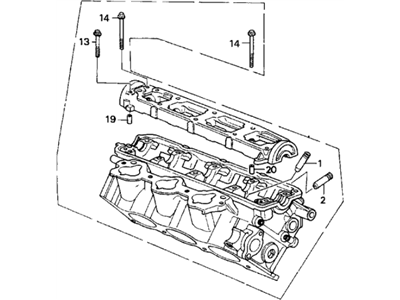
 Product Specifications
- Other Name: Cylinder Head
- Position: Rear
- Item Weight: 27.00 Pounds
- Item Dimensions: 20.2 x 20.5 x 10.2 inches
- Condition: New
- Fitment Type: Direct Replacement
- SKU: 12300-PL2-000
- Warranty: This genuine part is guaranteed by Acura's factory warranty.
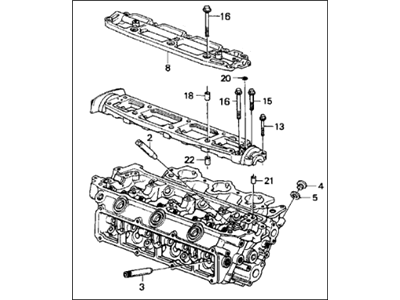
 Product Specifications
- Other Name: Cylinder Head
- Position: Front
- Item Weight: 29.40 Pounds
- Item Dimensions: 18.5 x 13.0 x 11.5 inches
- Condition: New
- Fitment Type: Direct Replacement
- SKU: 12100-PL2-000
- Warranty: This genuine part is guaranteed by Acura's factory warranty.
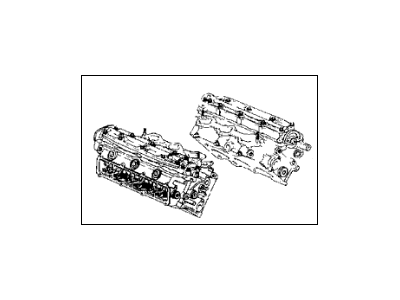
 Product Specifications
- Item Weight: 81.00 Pounds
- Item Dimensions: 26.9 x 19.3 x 9.6 inches
- Condition: New
- Fitment Type: Direct Replacement
- SKU: 10003-PL2-660
- Warranty: This genuine part is guaranteed by Acura's factory warranty.
1990 Acura Legend Cylinder Head
If you find yourself requiring new genuine 1990 Acura Legend Cylinder Head, consider paying us a visit. We carry a vast inventory of OEM 1990 Acura Legend Cylinder Head, offered at highly competitive prices and superior quality, all with a manufacturer's warranty. Additionally, we take pride in our first-class customer service and speedy delivery.
1990 Acura Legend Cylinder Head Parts Questions & Experts Answers
- Q:How should the Cylinder Head and Valve Train Components be Thoroughly Cleaned and Inspected during an Engine Overhaul on an 1990 Acura Legend?Posted by Francois D.A:Cleaning of the cylinder head(s) and the associated valve train components to a degree of thoroughness will serve to show the degree of valve service work that must be done during the engine overhaul. Start by scraping all traces of old gasket material, sealing compound, etc., off the head gasket, the intake manifold and exhaust manifold sealing surfaces without gouging the cylinder head. Blast built up scale from the coolant passages and clean deposits from various holes with a stiff wire brush. Using compressed air to clear debris, run an appropriate size tap into each threaded hole to eliminate corrosion and thread sealant. Using compressed air, solveth the cylinder head and dry thoroughly, and scrubs the exhaust and intake manifold stud threads with a wire brush; clean the exhaust and intake manifold stud threads with a wire brush. Cleaning cylinder heads and valve train components with chemicals may have merit in decarbonizing, but should be used carefully. With solvent, clean rocker arms, valve springs, spring seats, keepers, retainers, and those who can, mix parts. Remove heavy deposits from the valves with a scrape and brush with a motorized wire brush on the valve heads and stems as you do so, keeping the valves organized. Take a look at the head for cracks, coolant leakages, and other damage to it and, if needed, consult an automotive machine shop. To test your head gasket mating surface for warpage, try using a straightedge and a feeler gauge, and examine your valve seats for pitting, cracking or burning. The valve stem to guide clearance should be measured and deflection checked with a dial indicator; if limits are exceeded, valve guides should be replaced. Wear, deformation and cracks of each valve face, mechanical condition is inspected and corner margin width is measured to meet certain specification. Check wear on check valve springs and squareness of springs that aren't squared. Free length each valve spring is measured as tension decreases with age and use and with wear quality of spring retainers and keepers. Any questionable parts are replaced. Upon inspection, if valve components found in poor shape and beyond specified limits, reassemble valves in the cylinder head and follow the service recommendations given.Answered by Acura Parts Specialist Mitch / Jan 05, 2022
Related 1990 Acura Legend Parts
 1990 Acura Legend Cylinder Head Gasket
 1990 Acura Legend Timing Cover
 1990 Acura Legend Rocker Arm
 1990 Acura Legend Rocker Guide
 1990 Acura Legend Camshaft