×
- Hello
- Login or Register
- Quick Links
- Live Chat
- Track Order
- Parts Availability
- RMA
- Help Center
- Contact Us
- Shop for
- Acura Parts
- Acura Accessories

My Garage
My Account
Cart
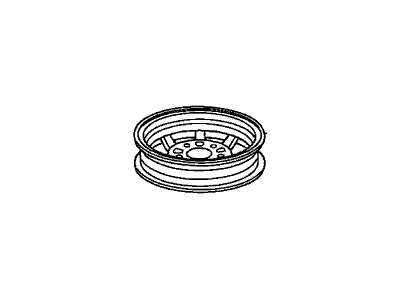
Genuine 2006 Acura TL Tire
Spare Tire- Select Vehicle by Model
- Select Vehicle by VIN
Select Vehicle by Model
orMake
Model
Year
Select Vehicle by VIN
For the most accurate results, select vehicle by your VIN (Vehicle Identification Number).
6 Tires found

 Product Specifications
- Item Weight: 15.70 Pounds
- Item Dimensions: 25.3 x 20.8 x 8.4 inches
- Condition: New
- Fitment Type: Direct Replacement
- SKU: 42751-YOK-031
- Warranty: This genuine part is guaranteed by Acura's factory warranty.
 Product Specifications
- Item Weight: 25.00 Pounds
- Item Dimensions: 26.3 x 26.0 x 9.5 inches
- Condition: New
- Fitment Type: Direct Replacement
- Require Quantity: 4
- SKU: 42751-MIC-537
- Warranty: This genuine part is guaranteed by Acura's factory warranty.
- Product Specifications
- Replaced by: 42751-BRI-088
- Item Weight: 26.60 Pounds
- Item Dimensions: 26.0 x 26.0 x 9.3 inches
- Condition: New
- Fitment Type: Direct Replacement
- Require Quantity: 4
- SKU: 42751-BRI-080
- Warranty: This genuine part is guaranteed by Acura's factory warranty.
- Product Specifications
- Item Weight: 27.30 Pounds
- Item Dimensions: 25.3 x 25.5 x 10.0 inches
- Condition: New
- Fitment Type: Direct Replacement
- Require Quantity: 4
- SKU: 42751-BRI-081
- Warranty: This genuine part is guaranteed by Acura's factory warranty.
- Product Specifications
- Item Weight: 6.40 Pounds
- Item Dimensions: 25.0 x 25.5 x 5.8 inches
- Condition: New
- Fitment Type: Direct Replacement
- SKU: 42751-BRI-096
- Warranty: This genuine part is guaranteed by Acura's factory warranty.
 Product Specifications
- Item Weight: 26.00 Pounds
- Item Dimensions: 25.8 x 25.5 x 9.4 inches
- Condition: New
- Fitment Type: Direct Replacement
- Require Quantity: 4
- SKU: 42751-MIC-087
- Warranty: This genuine part is guaranteed by Acura's factory warranty.
2006 Acura TL Tire
If you find yourself requiring new genuine 2006 Acura TL Tire, consider paying us a visit. We carry a vast inventory of OEM 2006 Acura TL Tire, offered at highly competitive prices and superior quality, all with a manufacturer's warranty. Additionally, we take pride in our first-class customer service and speedy delivery.
2006 Acura TL Tire Parts Questions & Experts Answers
- Q:What are the benefits of periodic tire inspections on an 2006 Acura TL?Posted by Eufemio E.A:Periodic inspection of the tires may spare you from the inconvenience of being stranded with a flat tire and can also provide you with vital information regarding possible problems in the steering and suspension systems before major damage occurs. Normal tread wear can be monitored with a simple, inexpensive device known as a tread depth indicator and when the tread depth reaches the specified minimum, the tire(s) should be replaced. Any abnormal tread wear such as cupping, flat spots and more wear on one side than the other are indications of front end alignment or balance problems and if any of these conditions are noted, the vehicle should be taken to a tire shop or service station to correct the problem. Cuts, punctures and embedded nails or tacks should be looked for closely and if a slow leak persists, the valve core should be checked to make sure it is tight. The inner side of each tire should be carefully inspected for evidence of brake fluid leakage and if any is found, the brakes should be inspected immediately. Correct tire air pressure adds miles to the lifespan of the tires, improves mileage and enhances overall ride quality and a tire pressure gauge is essential for this. Tire pressure should always be checked when the tires are cold and the valve cap should be unscrewed from the wheel or hubcap and the gauge pushed firmly onto the valve. The reading on the gauge should be noted and compared to the recommended tire pressure shown on the tire placard on the left door jamb. All four tires should be checked and, if necessary, enough air added to bring them up to the recommended pressure levels. The spare tire should also be kept inflated to the specified pressure.Answered by Acura Parts Specialist Carlos / Oct 01, 2025
Related 2006 Acura TL Parts
 2006 Acura TL Wheel Bearing
 2006 Acura TL Lug Nuts
 2006 Acura TL Rims
 2006 Acura TL TPMS Sensor
 2006 Acura TL Valve Stems & Caps
 2006 Acura TL Wheel Cover
 2006 Acura TL Wheel Hub
 2006 Acura TL Wheel Seal
 2006 Acura TL Wheel Stud