×
- Hello
- Login or Register
- Quick Links
- Live Chat
- Track Order
- Parts Availability
- RMA
- Help Center
- Contact Us
- Shop for
- Acura Parts
- Acura Accessories

My Garage
My Account
Cart
Genuine Acura Legend Steering Knuckle
Front Steering Knuckle- Select Vehicle by Model
- Select Vehicle by VIN
Select Vehicle by Model
orMake
Model
Year
Select Vehicle by VIN
For the most accurate results, select vehicle by your VIN (Vehicle Identification Number).
31 Steering Knuckles found
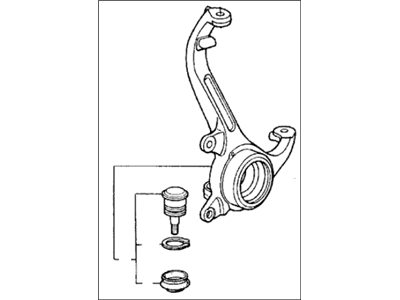
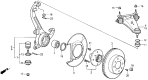
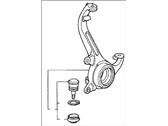
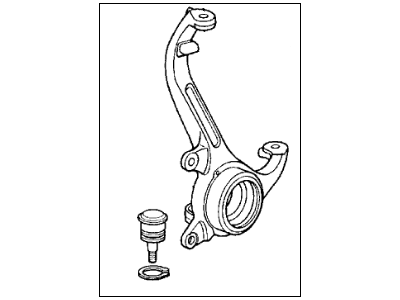
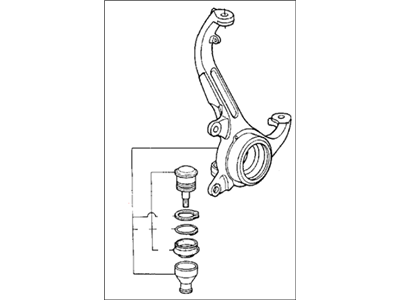
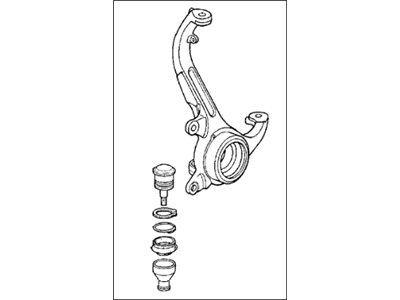
Acura Legend Left Front Knuckle
Part Number: 51215-SG0-505$20.66 MSRP: $166.43You Save: $145.77 (88%)Ships in 1-2 Business Days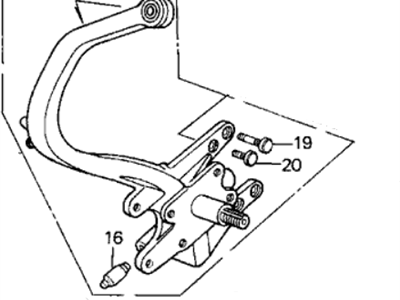
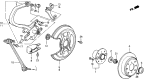
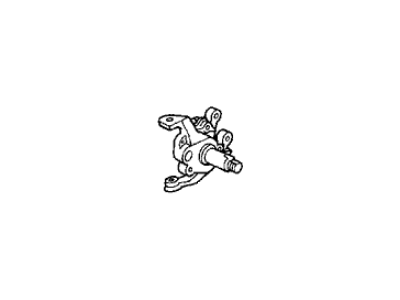
Acura Legend Left Rear Knuckle (A.L.B.)
Part Number: 52116-SG0-020$17.18 MSRP: $138.40You Save: $121.22 (88%)Ships in 1-2 Business Days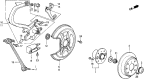
Acura Legend Left Rear Knuckle
Part Number: 52116-SG0-040$201.75 MSRP: $288.14You Save: $86.39 (30%)Ships in 1-3 Business Days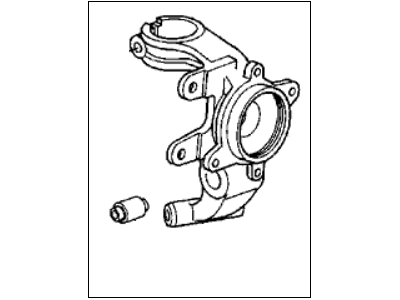
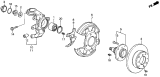

| Page 1 of 2 |Next >
1-20 of 31 Results
Acura Legend Steering Knuckle
Legend Steering Knuckle is one of those elements that make Acura the reliable car maker and the champion of high performance. Making it the bridge between the suspension, and the steering system, in the wheels, the Steering Knuckle ensures efficient wheel movement hence improving the legendary of the Acura Legend in efficiency and safety. Made for both 2-door coupe and 4-door sedan designs, the Steering Knuckle can suit the RWD and FWD/AWD/4WD technologies for Legend model. The excellence of material that composes Acura Legend Steering Knuckle is as strong enough in bearing the weight of the car as firm enough to handle the usual stress in servicing its functions. An innovative design that includes the materials and technologies as well as engineering helps to deliver the well-known instinctive manage of the Acura Legend notably owing to the double-wishbone front suspension. Moreover, the Steering Knuckle is also imperative in controlling the vehicle's alignment that improves the safety of the car on the road. As the result of constant innovations and perfect performance characteristics, Acura Legend Steering Knuckle is worth noteworthy in the automotive world, demonstrating the brand's devotion to the lasting quality. Ride quality whether in the city or on the highways is greatly enhanced by the Acura Legend Steering Knuckle and apart from the looks and performance, it can in fact be regarded as one the reasons why the Acura Legend has stood the test of time.
We provide a broad range of OEM Acura Legend Steering Knuckle at unbeatable prices on our website. For your OEM parts, You can count on the guaranteed quality, manufacturer's warranty, outstanding customer service, and prompt delivery. We look forward to your visit.
Acura Legend Steering Knuckle Parts Questions & Experts Answers
- Q:How is the Steering Knuckle removed and installed on an Acura Legend?Posted by Gurami B.A:First get rid of the boot on your vehicle's heel if you have one, handle the driveaxle nut, undo wheel lug nuts, lift up your vehicle's front end, and put it on strong jackstands. Remove the wheel and the driveaxle hub nut. Take off the brake hose bracket fasteners from the strut and steering knuckle, detach the brake caliper and suspend it with a wire, undo the caliper mounting bracket, then take off the brake disc. Climb inside the Wheel Hub to take the tie-rod end loose from the steering knuckle. For Legend models, disconnect the top joint from the top balljoint of the steering knuckle. Lift the knuckle and hub with both hands while positioning a wire loop underneath to hold up the driveaxle, to avoid hurting the driveaxle's inner joint. The bearings in the steering knuckle hub must be replaced by a dealership or repair shop using specific tools they have, since they need expert know-how to press out worn bearings. Let the driveaxle pass through the hub's splined hole as you move the steering knuckle into place before applying a tiny amount of wheel bearing grease to the axle's splines. On Legend cars, connect the upper end of the knuckle to the upper arm balljoint and tighten the balljoint stud nut to its correct tightness. On Legends, attach the knuckle balljoint on the bottom to the lower arm. Attach brake disc, caliper mount, and caliper. Then connect bracket(s) that holds the brake hose. Tighten the driveaxle nut firmly into place. Place your tire with the wheel nuts, lower your car, and tighten the nuts until they reach the required force. Squeezing the axle nut tightly to the right torque value is necessary. Take your car to an alignment shop and get them to check and, if needed, fix the front-wheel alignment.Answered by Acura Parts Specialist Roberto / Feb 17, 2025