×
- Hello
- Login or Register
- Quick Links
- Live Chat
- Track Order
- Parts Availability
- RMA
- Help Center
- Contact Us
- Shop for
- Acura Parts
- Acura Accessories

My Garage
My Account
Cart
Genuine Acura TL Transmission Assembly
Trans Assembly- Select Vehicle by Model
- Select Vehicle by VIN
Select Vehicle by Model
orMake
Model
Year
Select Vehicle by VIN
For the most accurate results, select vehicle by your VIN (Vehicle Identification Number).
23 Transmission Assemblies found
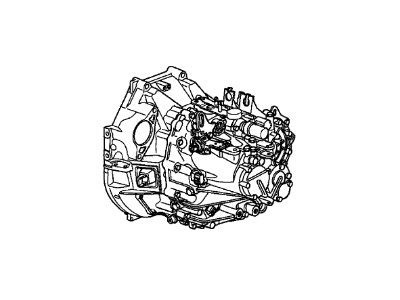
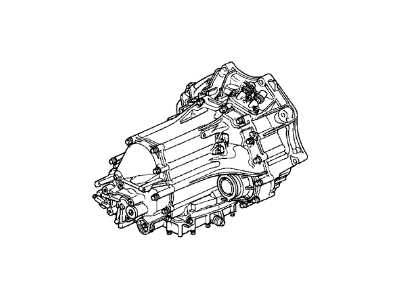
Acura TL Transmission Assembly
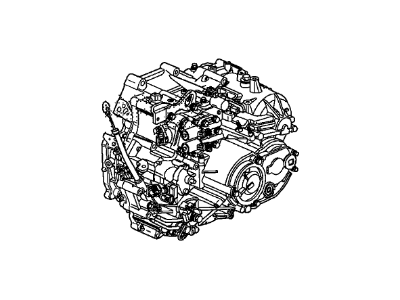
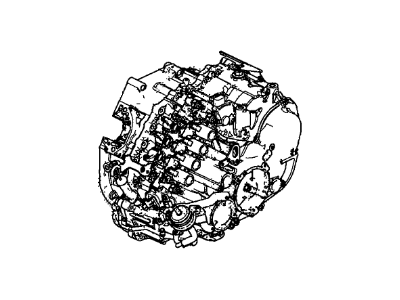
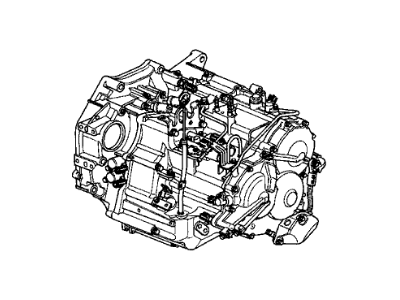
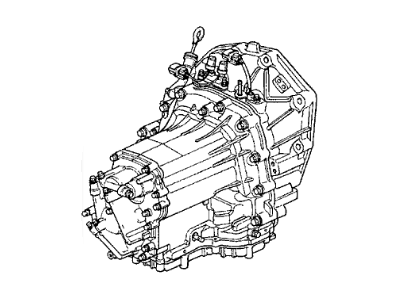
Part Number: 20011-RK6-M81$10448.94 MSRP: $16124.90You Save: $5675.96 (36%)Ships in 1-2 Business Days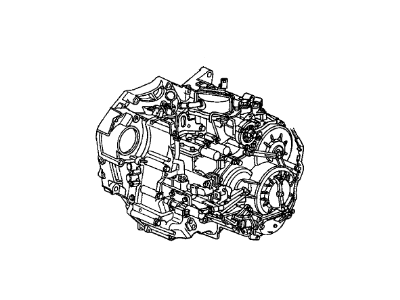
| Page 1 of 2 |Next >
1-20 of 23 Results
Acura TL Transmission Assembly
Acura TL Transmission Assembly allows the sedan to transfer engine torque into smooth forward movement while pairing power with speed on hills, cruising, and rapid starts. Early manuals required the driver to use skill in working a clutch and lining up parallel shaft gears, but the industry is transitioning to fully hydraulic automatics featuring planetary gearsets, making shifting a breeze. This is also the trend across TL generations. Each Transmission Assembly type achieves the same goal by different means. A manual has mechanical linkages you shift manually to make the drivetrain run. An automatic engages clutches and gearsets under the command of the computer. A continuously variable setup replaces fixed gears with belts and pulleys that slide between ratios. A dual clutch version has alternate gears preloaded so they can be swapped by computer in milliseconds. These choices demonstrate how one Transmission Assembly can provide either entertaining control or relaxed convenience that so many Acura drivers appreciate. Regardless of the style, as a unit, the Transmission Assembly channels fluid, lubricates itself, and must be kept leak-free because driving with a damaged Transmission Assembly can mean shuddering, gear slip, warning lights, and ultimately an immobilized car, making this component vital in every Acura TL and regular care of the Transmission Assembly an absolute necessity.
We provide a broad range of OEM Acura TL Transmission Assembly at unbeatable prices on our website. For your OEM parts, You can count on the guaranteed quality, manufacturer's warranty, outstanding customer service, and prompt delivery. We look forward to your visit.
Acura TL Transmission Assembly Parts Questions & Experts Answers
- Q:Is Rebuilding a Transmission Assembly a Challenging Task for a Do-It-Yourselfer on Acura TL?Posted by Marques H.A:Overhauling a manual transaxle is a challenging task for a do-it-yourselfer, requiring the disassembly and reassembly of numerous small parts, along with precise measurement of clearances that may need adjustment using select-fit spacers and snap-rings. While a competent individual can remove and install a transaxle, the overhaul process is best left to a repair shop, as the time and expense often surpass the cost of a rebuilt unit, which may be available through dealer parts departments and auto parts stores. An inexperienced mechanic can successfully rebuild a transaxle if equipped with the necessary special tools and approaches the job methodically to avoid overlooking any details. Essential tools for the overhaul include internal and external snap-ring pliers, a bearing puller, a slide hammer, a set of pin punches, a dial indicator, and possibly a hydraulic press, along with a sturdy workbench and a vise or transaxle stand. Careful documentation during disassembly is crucial, noting the arrangement and securing methods of each part to facilitate reassembly. Additionally, having an understanding of the malfunctioning area of the transaxle can simplify the examination and replacement of components, as certain issues are often linked to specific regions within the transaxle.Answered by Acura Parts Specialist Greg / Mar 09, 2025
Related Acura TL Parts
 Acura TL Torque Converter
 Acura TL Valve Body
 Acura TL Transmission Gasket
 Acura TL Side Cover Gasket
Browse by Year
2014 Transmission Assembly 2013 Transmission Assembly 2012 Transmission Assembly 2011 Transmission Assembly 2010 Transmission Assembly 2009 Transmission Assembly 2008 Transmission Assembly 2007 Transmission Assembly 2006 Transmission Assembly 2005 Transmission Assembly 2004 Transmission Assembly 2003 Transmission Assembly 2002 Transmission Assembly 2001 Transmission Assembly 2000 Transmission Assembly 1999 Transmission Assembly 1998 Transmission Assembly 1997 Transmission Assembly 1996 Transmission Assembly 1995 Transmission Assembly