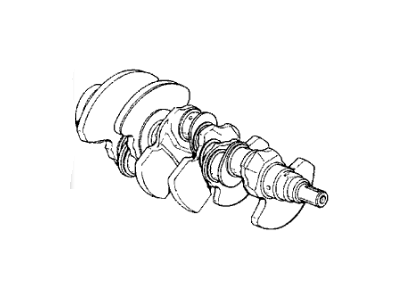
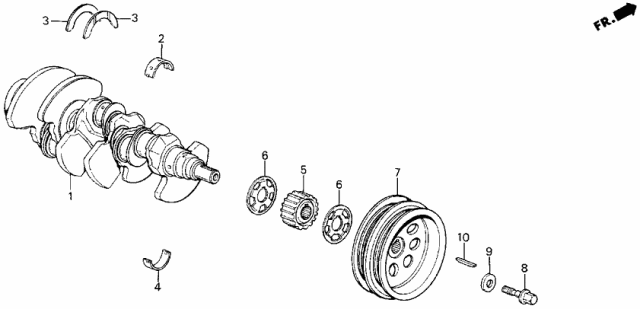
Once the engine has been removed from the vehicle, so has the flywheel or drive plate, timing belt, oil pan, oil pick up tube, oil pump, piston and connecting rod assemblies all the way up to the crankshaft, because the crankshaft can not be removed if the engine is still in the vehicle. The endplay should be checked before the crank is relieved by mounting a dial indicator with the crank in the datum by touching one of the crank throws and pushing the crankshaft back and forth with a screwdriver. Put the crankshaft at the back of the movement and zero on the dial indicator; then pry it forward and check the reading; the movement gives the endplay, which should be checked for wear in the thrust surfaces if the number exceeds specifications. The clearance of crankshaft to thrust main bearing can be measured if feeler gauges are available by prying crankshaft to the front and measuring the clearance between the crankshaft and the thrust main bearing. If the main bearing caps are not marked if for their locations and not numbered consecutively from front to rear, then mark them accordingly. Starting around the engine, carefully loosen the main bearing cap bolts gradually and gently tap the caps with a soft face hammer to break the block away from the caps, using bolts as levers if need be. Carefully lift the crankshaft out, finally, hopefully with some assistance due to the weight of the whole part, and slide the bearing inserts into their respective locations in the engine block, affixing the main bearing cap bridge and tightening the main bearing bolts finger tight.