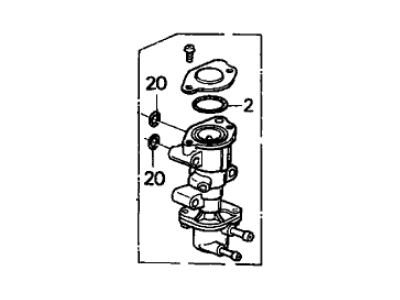
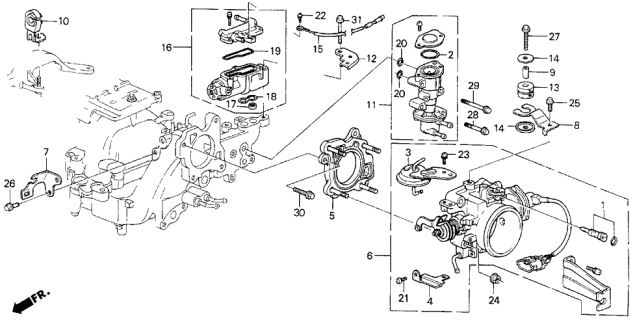
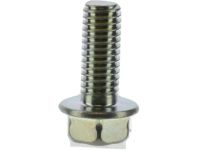
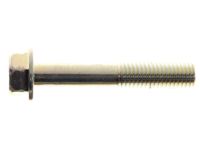
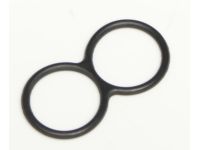
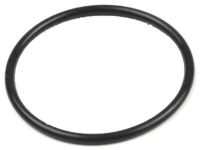
Starting in 1988, EACV (electrical actuating cable valve) came as standard equipment. EICV (electric intermittent vacuum control valve) was for 1986 and 1987 models. First, turn the ignition OFF. Take out the HAZARD fuse under the main fuse box for 10 seconds to reset the ECU. Also remove the ALTERNATOR SENSE fuse in the engine compartment relay box for another 10 seconds in all Legends to reset the ECU. Find the EACV or EICV, which comes in either box or cylinder form and connects to the intake manifold close to the throttle body. Test the EACV by measuring its electrical resistance with an ohm meter between its two terminals. You should get values between 8 and 15 ohms, while the EICV should read between 6 and 20 ohms. Keep an eye out for electrical current between the two ports on each terminal - it should be missing. To test, replace any failing EACV or EICV right away. Start the vehicle then measure the connection voltage between the wires marked black/yellow (+) and blue/yellow (-) on the car's wire harness that connects to the EACV or the blue/red (-) wire for the EICV. When you find electrical power in the ECU, you need help from a dealer or other certified repair person to check the vehicle. Measuring voltage between black/yellow and ground should give you a reading. You must find and fix a break in the black/yellow wire that connects EACV to the #4 fuse or main relay for EACV, and similarly between EICV and main relay for EICV. Take your car to a qualified repair shop or authorized dealer when voltage readings show up. Before putting in a new one, unfold the electrical connector from the EACV, take out the bolts holding the valve to the intake manifold, and slip out the EACV/EICV from the engine. Installation is the reverse of removal.