×
- Hello
- Login or Register
- Quick Links
- Live Chat
- Track Order
- Parts Availability
- RMA
- Help Center
- Contact Us
- Shop for
- Acura Parts
- Acura Accessories

My Garage
My Account
Cart
Genuine Acura Legend Clutch Fork
Release Fork- Select Vehicle by Model
- Select Vehicle by VIN
Select Vehicle by Model
orMake
Model
Year
Select Vehicle by VIN
For the most accurate results, select vehicle by your VIN (Vehicle Identification Number).
6 Clutch Forks found
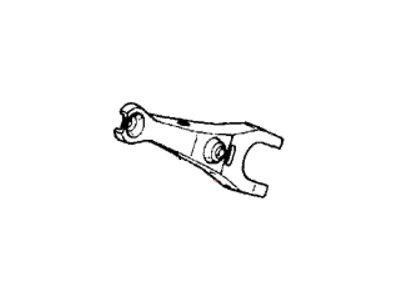
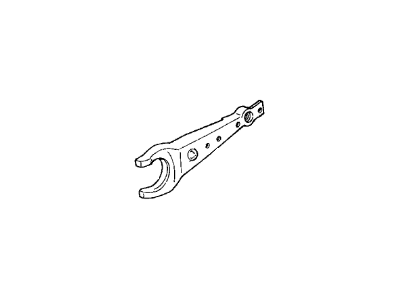
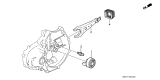
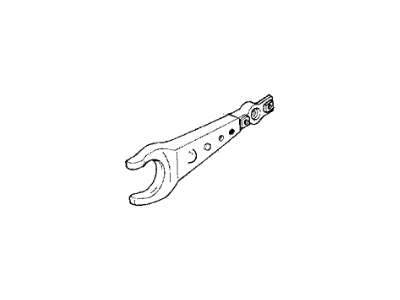
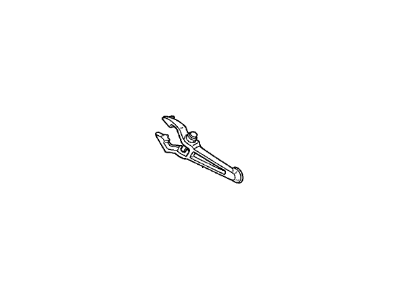
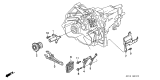
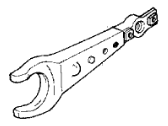
Acura Legend Clutch Fork
When operating Acura Legend manual transmissions the Clutch Fork functions as the control mechanism to activate the clutch for gear changes. A driver using the clutch pedal creates motion of the Clutch Fork that moves both the release bearing and the pressure plate for controlled shifting. Engineers utilize two primary clutch linkage systems in modern vehicles: mechanical and hydraulic which shows hydraulic systems are preferred because they operate automatically. Both cable and pushrod linkages work in mechanical systems however manual adjustments are often needed to operate them. The Acura Clutch Fork operates in multiple designs including ones that use a concentric slave cylinder (CSC) to remove the necessity of an independent fork. The shutdown of Legend Clutch Forks leads to transmission problems and complete mechanical clutch breakdowns thus demonstrating its critical role during vehicle operation. Proper maintenance and timely replacement of the release bearing connected to the Acura Legend Clutch Fork should be performed regularly to halt wear while maintaining optimal performance levels.
We provide a broad range of OEM Acura Legend Clutch Fork at unbeatable prices on our website. For your OEM parts, You can count on the guaranteed quality, manufacturer's warranty, outstanding customer service, and prompt delivery. We look forward to your visit.
Acura Legend Clutch Fork Parts Questions & Experts Answers
- Q:How to Remove and Install the Clutch Release Bearing and Clutch Fork on Acura Legend?Posted by Tyson J.A:Loosen the clutch release cylinder without cutting the fluid line between the master cylinder and release cylinder. Remove the transaxle. Move the release bearing from the shaft, push up the release fork to take it off the pivot stud, and pull the fork out. Turn the inner race in one direction, applying pressure as you wedge the bearing from the outside. It's time to replace the entire bearing and wheel hub unit if turning the race feels rough or noisy. Dampen a clean rag and wipe the bearing, checking for any damage, wear, and cracks. Most mechanics replace the bearing during the clutch job to make sure it doesn't break later. Keep your bearing sealed because it should last for all time without being dipped in cleaning solution. Check the release lever for cracks and bends. Before mounting the new bearing, remove the bearing holder from the worn-out bearing by feeding it through the driver tool called a seal/bushing driver or using a socket of matching size. Inside the release bearing gets a layer of high-temp grease. Also, coat input shaft splines and front bearing retainer lightly with the same grease. Smoothly apply high-temperature grease to three spots: where the fork meets the ball socket, where the fork's ends touch, and where the pushrod meets the release cylinder. Put the release bearing on the release fork, and slide it onto the input shaft front bearing holder while letting the fork end pass through the clutch housing opening. Use force to place the release fork onto the ball stud until it stays in place. Rub a thin layer of grease on the release bearing's face where it meets the diaphragm fingers of the pressure plate. Once everything is in place, just reinstall everything in the opposite order you took it apart.Answered by Acura Parts Specialist Mitch / Nov 20, 2024