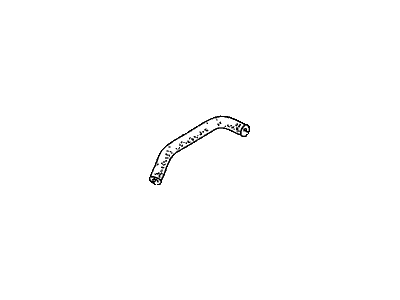
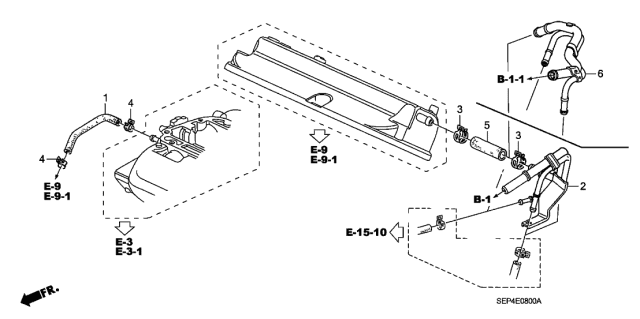
It is important that hoses in the engine, accessory, and emission systems be regularly checked because very high temperatures under the hood can cause the hoses to wear out. Uncover hose cracks, clamps at liberty, material hardening, or leaks particularly from where clamps are used to prevent the hose from leaking. Pay close attention to the PCV system hose that vents crankcase blow-by gas into the intake manifold through a rubber tube via the PCV valve which minimizes hydrocarbon emissions. Inspect this hose for any damage and make sure it is not blocked up. Vacuum tubes of different colors play an important role in several systems; when replacing them ensure they meet required material specifications . When more than one hose is removed remember to tag all hoses and fittings. Moreover, inspect plastic T-fittings for cracks and kinks in hoses. Use a small piece of vacuum hose as a stethoscope to find vacuum leaks. When checking fuel hoses be ready with spilled fuel if you disconnect them; check for deterioration, chafing or cracks especially at bends and fitting points. Use your injection system's designed hose when you replace it. Replace spring type clamps with screw clamps instead of taking off Hoses with spring type clamps. Metal lines should also be inspected for bending crimping or cracking particularly those connected to fuel lines that have sections replaced with seamless steel tubing for strength . Lastly examine metal brake lines where they enter the master cylinder and brake proportioning unit for any cracks and loose fittings then carry out an extensive inspection of whole brake system immediately because it means there is brake fluid leakage.