×
- Hello
- Login or Register
- Quick Links
- Live Chat
- Track Order
- Parts Availability
- RMA
- Help Center
- Contact Us
- Shop for
- Acura Parts
- Acura Accessories

My Garage
My Account
Cart
Genuine 1994 Acura Integra Cylinder Head
Head- Select Vehicle by Model
- Select Vehicle by VIN
Select Vehicle by Model
orMake
Model
Year
Select Vehicle by VIN
For the most accurate results, select vehicle by your VIN (Vehicle Identification Number).
4 Cylinder Heads found
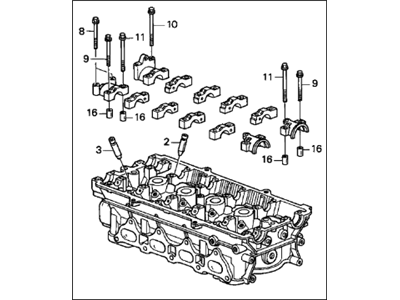
 Product Specifications
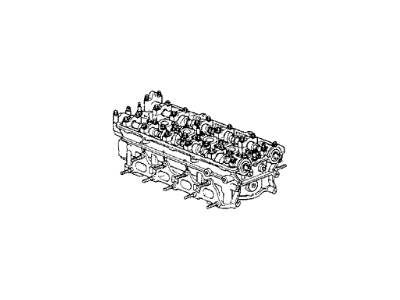
- Other Name: Cylinder Head
- Item Weight: 15.30 Pounds
- Item Dimensions: 21.5 x 10.8 x 10.3 inches
- Condition: New
- Fitment Type: Direct Replacement
- SKU: 12100-PR4-000
- Warranty: This genuine part is guaranteed by Acura's factory warranty.
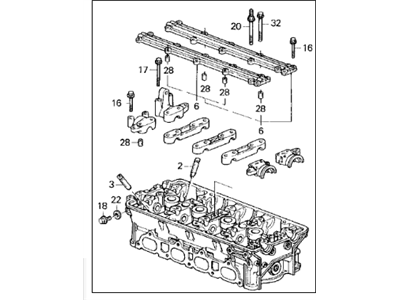
 Product Specifications
- Other Name: Cylinder Head
- Item Weight: 22.50 Pounds
- Item Dimensions: 22.5 x 12.2 x 10.9 inches
- Condition: New
- Fitment Type: Direct Replacement
- SKU: 12100-P72-000
- Warranty: This genuine part is guaranteed by Acura's factory warranty.
 Product Specifications
- Other Name: General Assembly, Cylinder Head
- Item Weight: 69.60 Pounds
- Item Dimensions: 24.8 x 15.4 x 14.2 inches
- Condition: New
- Fitment Type: Direct Replacement
- SKU: 10003-P75-A00
- Warranty: This genuine part is guaranteed by Acura's factory warranty.
 Product Specifications
- Other Name: General Assembly, Cylinder Head
- Item Weight: 66.30 Pounds
- Item Dimensions: 24.3 x 15.2 x 13.9 inches
- Condition: New
- Fitment Type: Direct Replacement
- SKU: 10003-P72-A00
- Warranty: This genuine part is guaranteed by Acura's factory warranty.
1994 Acura Integra Cylinder Head
If you find yourself requiring new genuine 1994 Acura Integra Cylinder Head, consider paying us a visit. We carry a vast inventory of OEM 1994 Acura Integra Cylinder Head, offered at highly competitive prices and superior quality, all with a manufacturer's warranty. Additionally, we take pride in our first-class customer service and speedy delivery.
1994 Acura Integra Cylinder Head Parts Questions & Experts Answers
- Q:How Should the Cylinder Head and Valve Train Components Be Thoroughly Cleaned and Inspected During an Engine Overhaul on an 1994 Acura Integra?Posted by Lanise W.A:Thorough cleaning of the cylinder head and related valve train components, followed by a detailed inspection, will enable a decision on the necessary valve service work during the engine overhaul. Begin by scraping all traces of old gasket material and sealant off the mating surfaces of the head gasket, intake manifold, and exhaust manifold, taking care not to gouge the cylinder head. Remove built-up scale from the coolant passages and use a stiff wire brush to clear deposits from various holes. Run an appropriate size tap into each threaded hole to eliminate corrosion and thread sealant, using compressed air to clear debris while wearing eye protection. Clean the camshaft bearing cap bolt threads with a wire brush, then clean the cylinder head with solvent and dry it thoroughly, utilizing compressed air for efficiency. Decarbonizing chemicals may be useful but should be handled with caution. Clean the rocker arms and bearing caps with solvent, ensuring they are dried thoroughly without mixing them up, and do the same for the valve springs, spring seats, keepers, and retainers, working on one valve at a time. Scrape off heavy deposits from the valves and use a motorized wire brush for the valve heads and stems, ensuring not to mix up the valves. Inspect the head for cracks, coolant leakage, and other damage, consulting an automotive machine shop for repairs if necessary. Check the head gasket mating surface for warpage using a straightedge and feeler gauge, and examine the valve seats for pitting, cracking, or burning, which may require professional valve service. Measure the valve stem-to-guide clearance with a dial indicator, and if there are concerns about the valve guides, have them checked by a machine shop. Inspect each valve face for wear, deformation, cracks, pits, and burned areas, checking the valve stem for scuffing and the neck for cracks, rotating the valve to check for bending. Measure the margin width on each valve, replacing any that fall below the specified limit. Check each valve spring for wear and pits, measuring the free length and ensuring they meet specifications, as any sagged springs should not be reused. Verify the squareness of each spring and replace any that are distorted or sagged. Inspect the spring retainers and keepers for wear and cracks, replacing any questionable parts to prevent extensive damage during engine operation. If the inspection reveals that the valve components are in poor condition and worn beyond specified limits, reassemble the valves in the cylinder head.Answered by Acura Parts Specialist Miles / Feb 01, 2023
Related 1994 Acura Integra Parts
 1994 Acura Integra Cylinder Head Gasket
 1994 Acura Integra Timing Cover
 1994 Acura Integra Rocker Arm
 1994 Acura Integra Camshaft
 1994 Acura Integra Spool Valve