×
- Hello
- Login or Register
- Quick Links
- Live Chat
- Track Order
- Parts Availability
- RMA
- Help Center
- Contact Us
- Shop for
- Acura Parts
- Acura Accessories

My Garage
My Account
Cart
Genuine 2000 Acura Integra Engine
- Select Vehicle by Model
- Select Vehicle by VIN
Select Vehicle by Model
orMake
Model
Year
Select Vehicle by VIN
For the most accurate results, select vehicle by your VIN (Vehicle Identification Number).
6 Engines found
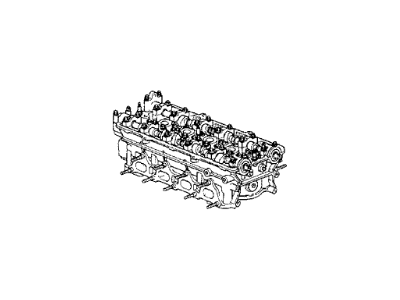
 Product Specifications
- Other Name: General Assembly, Cylinder Head
- Item Weight: 141.00 Pounds
- Item Dimensions: 23.7 x 13.0 x 9.9 inches
- Condition: New
- Fitment Type: Direct Replacement
- SKU: 10003-P75-A02
- Warranty: This genuine part is guaranteed by Acura's factory warranty.
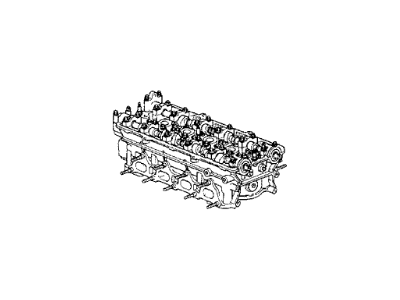
 Product Specifications
- Other Name: General Assembly, Cylinder Head
- Replaced by: 10003-P73-305
- Item Weight: 70.90 Pounds
- Item Dimensions: 24.1 x 14.9 x 14.5 inches
- Condition: New
- Fitment Type: Direct Replacement
- SKU: 10003-P73-A02
- Warranty: This genuine part is guaranteed by Acura's factory warranty.
- Product Specifications
- Other Name: Cylinder Head Assembly
- Replaces: 10003-P72-A01
- Item Weight: 71.20 Pounds
- Item Dimensions: 24.3 x 15.0 x 14.1 inches
- Condition: New
- Fitment Type: Direct Replacement
- SKU: 10003-P72-A02
- Warranty: This genuine part is guaranteed by Acura's factory warranty.

2000 Acura Integra General Assembly, Cylinder Block =A.C.L. =Q. (B18B1) (B18B2)
Part Number: 10002-P75-A01Product Specifications- Other Name: Short Block
- Item Weight: 146.20 Pounds
- Item Dimensions: 28.0 x 28.6 x 20.0 inches
- Condition: New
- Fitment Type: Direct Replacement
- SKU: 10002-P75-A01
- Warranty: This genuine part is guaranteed by Acura's factory warranty.
- Product Specifications
- Other Name: Short Block
- Replaces: 10002-P73-A01, 10002-P73-A00, 10002-P73-A02
- Item Weight: 65.40 Pounds
- Item Dimensions: 29.1 x 29.0 x 19.7 inches
- Condition: New
- Fitment Type: Direct Replacement
- SKU: 10002-P73-A03
- Warranty: This genuine part is guaranteed by Acura's factory warranty.
- Product Specifications
- Other Name: Short Block
- Replaces: 10002-P72-A01
- Item Weight: 141.70 Pounds
- Item Dimensions: 29.1 x 29.3 x 20.3 inches
- Condition: New
- Fitment Type: Direct Replacement
- SKU: 10002-P72-A02
- Warranty: This genuine part is guaranteed by Acura's factory warranty.
2000 Acura Integra Engine
If you find yourself requiring new genuine 2000 Acura Integra Engine, consider paying us a visit. We carry a vast inventory of OEM 2000 Acura Integra Engine, offered at highly competitive prices and superior quality, all with a manufacturer's warranty. Additionally, we take pride in our first-class customer service and speedy delivery.
2000 Acura Integra Engine Parts Questions & Experts Answers
- Q:What preliminary steps should be taken before removing an engine for overhaul or major repair work on an 2000 Acura Integra?Posted by Horacio O.A:Several preliminary steps should be taken when it is necessary to remove an engine for a major overhaul or major repair work. It is very important to need a room for the activity where it conditions adequate workspace and storage for the vehicle. a flat, level, clean work surface made of concrete or asphalt is necessary. Starting the removal procedure with the engine compartment and engine cleaned will keep tools neat and tidy. The equipment is rated to take more than the combined weight of the engine/transaxle and its accessories, and you'll need an engine hoist or A frame. The possibility of harming within the act of removing the engine from the chassis makes safety number one. If the removal process is being performed by a novice it may be wise to have a helper on hand, as the help of someone of more experienced can be of assistance. Like any process, you should plan the operation in advance, plan to have all the required tools and equipment available before you even initiate the job. A heavy duty floor jack, complete sets of wrenches and sockets, wooden blocks, lots of rags and cleaning solvent for wiping up spilled oil, coolant and gasoline, are essential equipment for safe and relatively easy engine removal and installation. If you are renting a hoist, it is better to arrange to rent beforehand, especially if you want to minimize all possible operations, spend less money and less time. You can expect the vehicle to be dead for a while, and you'll need a machine shop to do things that require specialized tools. Before removing the engine, consulting these shops to spool up and get an idea for how long it'll take to rebuild or repair components is smart. Careless actions when removing and replacing the engine can result in serious injury, so always take the time to plan out the work, and exercise extreme caution when you're doing it, as serious injury can result from it.Answered by Acura Parts Specialist Sergio / Feb 01, 2026
Related 2000 Acura Integra Parts
 2000 Acura Integra Valve Cover Gasket
 2000 Acura Integra Oil Pan
 2000 Acura Integra Cylinder Head Gasket
 2000 Acura Integra Cylinder Head
 2000 Acura Integra Intake Manifold Gasket
 2000 Acura Integra Exhaust Manifold Gasket
 2000 Acura Integra Camshaft
 2000 Acura Integra Crankshaft
 2000 Acura Integra Transmission Assembly
 2000 Acura Integra Transmission Gasket
 2000 Acura Integra Camshaft Seal
 2000 Acura Integra Engine Block